
How We Kept Zuckerberg’s Visit A Secret - CcHUB CEO, Tijani
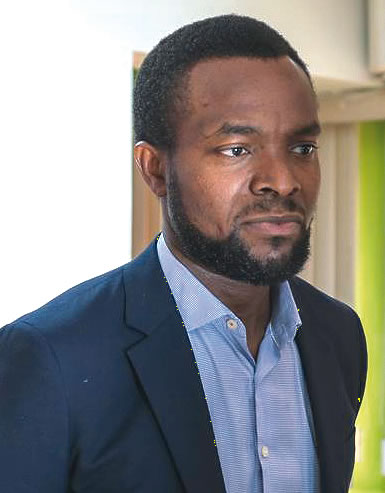
Bosun Tijani, CEO/Co-founder of the Co-creation Hub, an incubator for technology start-up companies in Lagos, tells Tobi Aworinde about planning Facebook CEO, Mark Zuckerberg’s first visit to Nigeria
When did you discover your passion for mentoring young entrepreneurs?
My passion is not mentoring entrepreneurs. My interest is in finding ways to make technology work for us as a society and the reason why I am passionate about that is, I believe that as a society in Nigeria, and Africa as a whole, for us to move forward, we have to invest in our ability to create the future we want to see. That literally means we need to imbibe the culture of building solutions. If we have bad roads, we need to imbibe the culture of understanding how to build roads that will last, not necessarily “importing” companies that will do it for us. If our education is bad, we need to be able to create a better education system. That is my interest. But fortunately, technology is one tool that enables and provides opportunities for us to do things at scale. We are a large country and if we use technology smartly, we can reach much more people within the country and also build exciting scalable solutions that last. That is why I have decided to do what I do, which is to find ways in which technology can be useful and one of those ways would be to find smart people.
If my interest is in building technology solutions, obviously, I have to find smart and creative people that will build those solutions. So, find them, support them, invest in them and expose them to people who can help make their ventures grow—that’s the first thing. The second most important thing is also working with civil society organisations; these are organisations that are passionate about solving social problems. It is important that we work with them and empower them to also use technology in exciting ways. The last one is that if everything I have said is ever going to work, we need talent—we need people who are talented. We need people who can build the technology, so I am also interested in how do we find and train such people so that they can then become the future we want to see? That is what I do and what is what I am passionate about.
When did you start CcHUB?
We founded CcHUB in 2010, but the innovation centre opened in September 2011. I still have the book in which I started jotting the idea and I met with my co-founder, Femi Longe. We were both privileged to be in London—we studied in Nigeria and got the opportunity to go abroad for internship through a student organisation. We stayed in touch, met and shared ideas. He was working in social innovations; I was working in innovation consulting. We started thinking of how we could help support creative people in Nigeria. We started writing ideas down two to three years before launching in 2010.
How do you involve the government, knowing that a lot of this is its responsibility?
Some of it; it’s not the sole responsibility of government. Government should be responsible; we have to work with government to provide the right enabling environment to make all these things work, but to a large extent, it is the responsibility of private sector organisations. Government has no business being in business; government’s role is not to run businesses and if government’s role is not to run businesses, government can’t understand how to support businesses. But what government can do is provide the enabling environment, put in the right infrastructure, and ensure that it is easy to do business in the country.
Government can do all that by working with private sector organisations to understand their needs, understand what enabling environment and infrastructure they can put in place that would help the business do well. What policies can they put in place that would make sure that businesses are not being spaced and businesses are creating jobs and generating wealth for the nation? That is the role of government. For civil society organisations, we have to go out there to look for them, because they are exciting organisations that take on the responsibility to do social good. In every society, you need them. They are not necessarily meant to replace government, but they are meant to support the work that government is meant to be doing.
What do you think about all the excitement that has come about as a result of Facebook founder, Mark Zuckerberg’s visit to Nigeria?
Who would not be excited? This man is worth about, how much, between $53 and $55bn. That is a lot of money. He is worth much more than our budget. He is, probably, the sixth or seventh richest man in the world, walking the streets of Yaba, right here in Nigeria. I think for a country like Nigeria, with all the bad press that we get and the cynicism around the name Nigeria, that was a huge surprise for everybody. It is unbelievable to a lot of people that Mark actually chose to come to Nigeria. It gives us hope that there is something unique about this place. But unfortunately, we are not taking advantage of it. Again, think about it, do you know that he came in on the day Nigeria was proclaimed to be entering the worst recession in 29 years? What sort of coincidence is that? When the world is telling us that we are going down, one of the richest people in the world came and he was telling us, “You have a lot of good in you and you can go up.” It is a message.
How much went into keeping his visit a secret?
It was challenging. We were literally warned not to (say anything); if there was a leak, he would turn back, he wouldn’t come. The sixth or seventh richest man in the world; it was a security threat. We didn’t know on time that he was the one that was coming; we knew a CEO or executive was coming from Facebook. Then few weeks before his arrival, we were informed that he was coming.
What were some of your expectations of regarding his visit?
I had absolutely no expectations. I didn’t know what to expect. Of course, everyone was stunned to see Mark. People were confused. But he was a cool guy, reasonable, mingled with everybody and took selfies.
Did he comment on the energy and culture of Lagos?
I think he was really stunned at the entrepreneurial spirit of Nigerians. He said from the moment (the plane) landed, people were different and the way people just wanted to do things, he could tell that a lot of people here are serious-minded entrepreneurs. He sees the opportunities, not only the fact that we have a big market; we have people who are talented, people who are dreamers and for him, that is a major part of our future and one of the things that will determine how far we go as a people.
When did you discover your passion for mentoring young entrepreneurs?
My passion is not mentoring entrepreneurs. My interest is in finding ways to make technology work for us as a society and the reason why I am passionate about that is, I believe that as a society in Nigeria, and Africa as a whole, for us to move forward, we have to invest in our ability to create the future we want to see. That literally means we need to imbibe the culture of building solutions. If we have bad roads, we need to imbibe the culture of understanding how to build roads that will last, not necessarily “importing” companies that will do it for us. If our education is bad, we need to be able to create a better education system. That is my interest. But fortunately, technology is one tool that enables and provides opportunities for us to do things at scale. We are a large country and if we use technology smartly, we can reach much more people within the country and also build exciting scalable solutions that last. That is why I have decided to do what I do, which is to find ways in which technology can be useful and one of those ways would be to find smart people.
If my interest is in building technology solutions, obviously, I have to find smart and creative people that will build those solutions. So, find them, support them, invest in them and expose them to people who can help make their ventures grow—that’s the first thing. The second most important thing is also working with civil society organisations; these are organisations that are passionate about solving social problems. It is important that we work with them and empower them to also use technology in exciting ways. The last one is that if everything I have said is ever going to work, we need talent—we need people who are talented. We need people who can build the technology, so I am also interested in how do we find and train such people so that they can then become the future we want to see? That is what I do and what is what I am passionate about.
When did you start CcHUB?
We founded CcHUB in 2010, but the innovation centre opened in September 2011. I still have the book in which I started jotting the idea and I met with my co-founder, Femi Longe. We were both privileged to be in London—we studied in Nigeria and got the opportunity to go abroad for internship through a student organisation. We stayed in touch, met and shared ideas. He was working in social innovations; I was working in innovation consulting. We started thinking of how we could help support creative people in Nigeria. We started writing ideas down two to three years before launching in 2010.
How do you involve the government, knowing that a lot of this is its responsibility?
Some of it; it’s not the sole responsibility of government. Government should be responsible; we have to work with government to provide the right enabling environment to make all these things work, but to a large extent, it is the responsibility of private sector organisations. Government has no business being in business; government’s role is not to run businesses and if government’s role is not to run businesses, government can’t understand how to support businesses. But what government can do is provide the enabling environment, put in the right infrastructure, and ensure that it is easy to do business in the country.
Government can do all that by working with private sector organisations to understand their needs, understand what enabling environment and infrastructure they can put in place that would help the business do well. What policies can they put in place that would make sure that businesses are not being spaced and businesses are creating jobs and generating wealth for the nation? That is the role of government. For civil society organisations, we have to go out there to look for them, because they are exciting organisations that take on the responsibility to do social good. In every society, you need them. They are not necessarily meant to replace government, but they are meant to support the work that government is meant to be doing.
What do you think about all the excitement that has come about as a result of Facebook founder, Mark Zuckerberg’s visit to Nigeria?
Who would not be excited? This man is worth about, how much, between $53 and $55bn. That is a lot of money. He is worth much more than our budget. He is, probably, the sixth or seventh richest man in the world, walking the streets of Yaba, right here in Nigeria. I think for a country like Nigeria, with all the bad press that we get and the cynicism around the name Nigeria, that was a huge surprise for everybody. It is unbelievable to a lot of people that Mark actually chose to come to Nigeria. It gives us hope that there is something unique about this place. But unfortunately, we are not taking advantage of it. Again, think about it, do you know that he came in on the day Nigeria was proclaimed to be entering the worst recession in 29 years? What sort of coincidence is that? When the world is telling us that we are going down, one of the richest people in the world came and he was telling us, “You have a lot of good in you and you can go up.” It is a message.
How much went into keeping his visit a secret?
It was challenging. We were literally warned not to (say anything); if there was a leak, he would turn back, he wouldn’t come. The sixth or seventh richest man in the world; it was a security threat. We didn’t know on time that he was the one that was coming; we knew a CEO or executive was coming from Facebook. Then few weeks before his arrival, we were informed that he was coming.
What were some of your expectations of regarding his visit?
I had absolutely no expectations. I didn’t know what to expect. Of course, everyone was stunned to see Mark. People were confused. But he was a cool guy, reasonable, mingled with everybody and took selfies.
Did he comment on the energy and culture of Lagos?
I think he was really stunned at the entrepreneurial spirit of Nigerians. He said from the moment (the plane) landed, people were different and the way people just wanted to do things, he could tell that a lot of people here are serious-minded entrepreneurs. He sees the opportunities, not only the fact that we have a big market; we have people who are talented, people who are dreamers and for him, that is a major part of our future and one of the things that will determine how far we go as a people.


